
Freehand drawing and digital modeling respond to two distinct logics in interior architecture. The former translates a spatial intention into a few strokes, while the latter confronts it with the physical constraints of a location. Their articulation within the same project defines a hybrid design method, increasingly structured by the available tools.
Hand Sketching and 3D Modeling: Two Design Languages
A pencil sketch captures an ambiance, a relationship of proportions, a circulation in space. It functions as a language of intention: quick, deliberately imprecise, open to interpretation. The interior designer who sketches in front of a client engages in a visual conversation where each stroke can be corrected, extended, or abandoned in a matter of seconds.
Recommended read : Discover the latest innovations in automotive technologies and diagnostic solutions
3D modeling operates differently. It imposes dimensions, wall thicknesses, ceiling heights. Software like SketchUp or Blender does not tolerate geometric approximation: each volume must be defined numerically. This rigor produces outputs that can be utilized by craftsmen and verified by the client.
The fundamental difference lies in the stage of the project where each tool intervenes. The sketch precedes the decision, while the 3D validates it. Understanding the alliance of drawing and 3D software helps grasp why these two steps do not substitute for one another.
Related reading : All the news in Normandy: follow local updates in real time
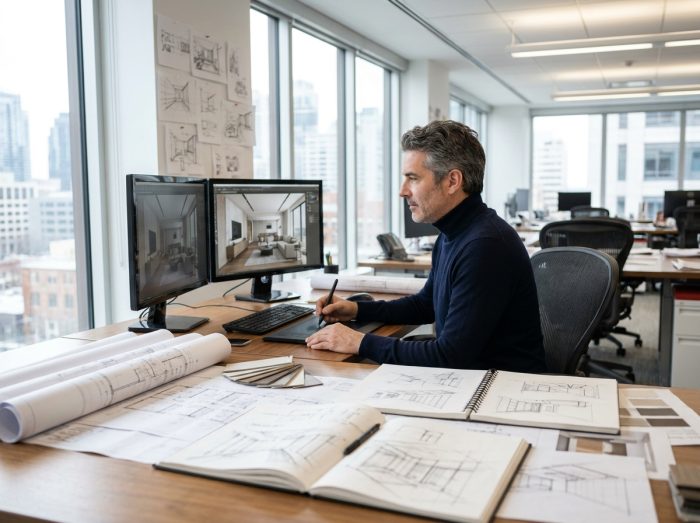
Hybrid Pencil-3D Workflow: How the Design Chain is Organized
The most common workflow sequence in an agency follows a precise chain. It all begins with on-site measurements, followed by quick sketches that explore several layout hypotheses. These sketches then serve as a basis for digital modeling.
From Sketch to Digital Model
The transition from paper to screen is not a simple transcription. The interior designer selects from their sketches the options that take into account technical constraints: location of networks, load-bearing walls, accessibility standards. The 3D model then becomes a tool for verification as much as for presentation.
Some professionals digitize their sketches directly to import them as reference layers in their software. This method retains the spontaneity of the stroke while allowing for a faithful modeling to the initial intention.
Real-Time Iterations with the Client
Co-design sessions, where the designer alternates between freehand sketches and live 3D adjustments, produce notable results. The Order of Architects has documented a 25% increase in client satisfaction in qualitative feedback thanks to this type of collaborative session, particularly in residential renovations.
The client simultaneously sees the raw idea (the sketch) and its technical translation (the rendering). This dual reading reduces misunderstandings about volumes, circulation, and materials.
3D Software in Interior Architecture: Selection Criteria for a Designer
The choice of modeling tool depends on professional status, budget, and the type of projects handled. Two main categories stand out.
- Proprietary software (Revit, 3ds Max, SketchUp Pro) offers an integrated ecosystem with material libraries, rendering plugins, and technical support. Their subscription cost represents a significant fixed expense for a freelancer.
- Open-source software like Blender is gaining ground among freelance interior architects. Blender offers a complete chain from imported sketch to photorealistic rendering, without subscription. Its learning curve remains steeper, but the French-speaking community produces abundant educational resources.
- Generative AI tools (Midjourney, for example) have recently integrated into hybrid workflows. Combined with SketchUp, they allow for accelerated iterations between the sketch and digital rendering, reducing design timelines by several weeks according to the “State of AI in Design” report by Autodesk published in January 2026.
For a student in training or an internship, Blender provides a solid entry point. For an agency handling VEFA projects or complex renovations, proprietary software with certified renderings is essential.
NF EN 17068 Standard and Reliability of 3D Renderings for the Client
Since the decree of November 12, 2024, the NF EN 17068:2024 standard imposes a certification for 3D visualizations in interior architecture. The goal is to ensure transparency regarding discrepancies between the rendering presented to the client and the final delivered result.
This regulatory requirement changes the game for professionals. A 3D rendering is no longer just a commercial seduction tool: it engages the designer’s responsibility for the fidelity of the represented materials, colors, and spatial proportions.
For students training for the profession, this standard means that learning to produce a beautiful rendering is no longer enough. They must also master color calibration of work screens and document the rendering parameters used. Schools that integrate this regulatory aspect into their courses better prepare their graduates for the current market.
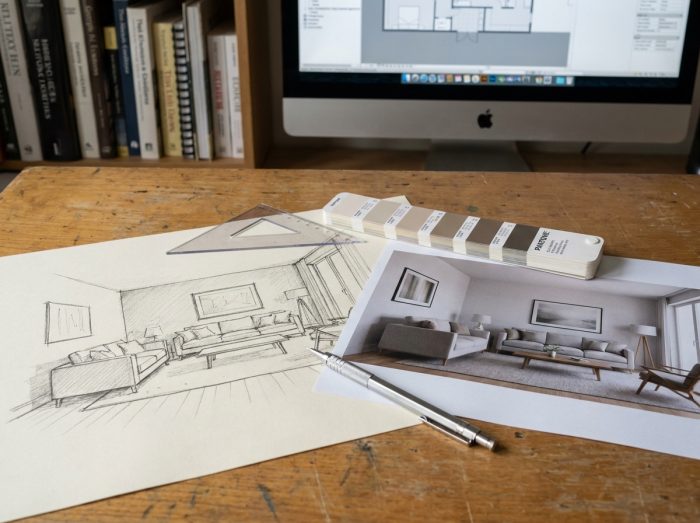
Interior Design Training: Articulating Drawing and Digital Skills
Interior architecture programs traditionally dedicate the first years to observational drawing, perspective, and space sketching. 3D software comes later, often in the second or third year.
This pedagogical progression has its logic: drawing develops the ability to perceive proportions, natural light, and relationships of volumes. Without this foundation, 3D modeling produces technically correct spaces but visually flat ones.
- The drawing course trains the eye to assess scale, to feel if a piece of furniture is too imposing for a room, to anticipate the effect of a material on the ambiance.
- The modeling course teaches dimensional rigor, layer management, and the production of plans executable by a craftsman.
- Experience in an agency or internship confronts these two skills with the reality of a project, a budget, and a client.
An interior designer who no longer draws by hand loses a direct communication tool with their client. A designer who ignores 3D deprives themselves of a lever for precision and professional credibility. The sought-after skill by agencies today combines both, with the ability to transition from one to the other without interruption in the design process.