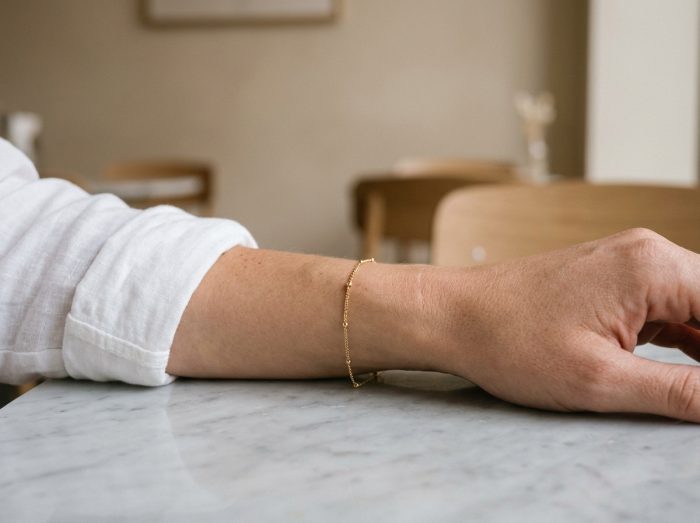
A slim wrist with a dress watch does not react the same way as a wide wrist worn bare all day. Before discussing color or material, it is this physical constraint that guides the choice between a thin bracelet and a colored cord. Both categories cater to distinct uses, body types, and clothing contexts, and confusing them often results in wearing an accessory that is either uncomfortable or goes unnoticed.
Thin bracelet or colored cord: the wrist test in everyday life
One can admire a piece of jewelry in a showcase, but it is after three days of continuous wear that one knows if it is suitable. A thin metal bracelet, often a chain with flat or round links, slips under a shirt sleeve without catching the fabric. It remains discreet during a meeting and does not clink on a keyboard.
The colored cord, on the other hand, tolerates variations in wrist size better. Thanks to a sliding knot or an adjustable clasp, it accommodates swelling due to heat or exertion. Feedback varies on this point, but most regular wearers confirm that a well-adjusted cord moves less than a too-loose thin chain.
To choose between a cord bracelet or a thin chain, it is more efficient to start from one’s main activity rather than from one’s wardrobe. A manual job, regular sports, frequent contact with water: the cord absorbs these constraints. An office job, structured outfits, formal outings: the thin chain stands out for its discretion.
Colors of the cord: what the shade says (and doesn’t say) about your style
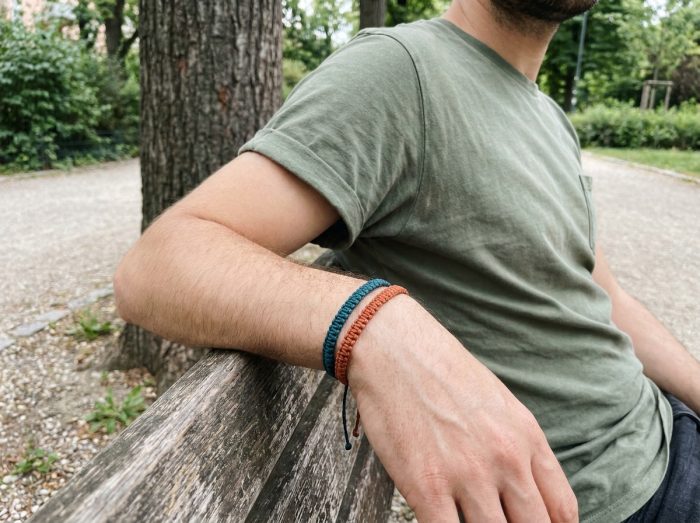
The colored cord attracts because it promises a touch of personality at a low cost. But not all colors work with every type of wardrobe. A bright red or pink cord contrasts with neutral outfits (white, beige, navy) and creates a focal point at the wrist. It is a bold choice, not an accessory that blends in everywhere.
Natural tones (ecru, khaki, brown, navy blue) are closer to the thin bracelet in terms of versatility. They can be worn without thinking, as they match with everything. The difference with a chain is the texture: the braided thread brings an organic feel that metal lacks.
Matching colors to skin tone and metals
A common pitfall is choosing the color of the cord without considering the other jewelry worn. A pink or red cord next to a silver steel watch creates a visual mismatch. Harmonizing the charm or clasp of the cord with the dominant metal results in a more coherent look: a gold clasp with warm tones (red, orange, brown), a silver clasp with cool tones (blue, green, gray).
- Light skin with cool undertones: night blue, pearl gray, or fir green cords work better than bright yellows
- Medium skin with warm undertones: terracotta, brick red, or powder pink cords create a beautiful contrast without being harsh on the eyes
- Dark skin: most shades work well, but white, gold, or coral cords stand out sharply
Layering and stacking: practical rules that change everything
The current trend encourages stacking bracelets. Recent collections favor fine and stackable pieces designed to be combined rather than worn alone. Mixing a thin chain bracelet with one or two colored cords works, provided some ground rules are respected.
Do not exceed three bracelets on the same wrist if one of them has a charm or a bulky design. Beyond that, the pieces clash and get damaged. Two thin cords and one chain, or one cord and two chains of different links, make balanced combinations.
Width and thickness: the detail that no one checks in-store
A thick thread cord (like macramé or wide braid) does not layer well with a delicate chain. The proportions should remain close. If the chain is a few millimeters wide, the cord should be of comparable diameter. Mixing a rigid bangle with a flexible cord also works, as the contrast is then intentional, not accidental.
Maintenance and lifespan: cord versus thin chain in real conditions
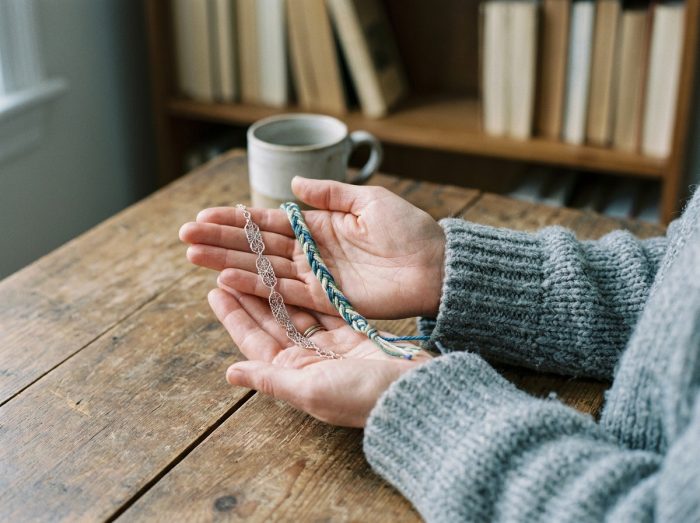
It is in durability that the two families diverge the most. A thin chain in steel or silver can be cleaned with a soft cloth and lasts for years without changing appearance. The colored cord, however, has a shorter lifespan: repeated exposure to water and sweat discolors the thread within a few months.
Cords made of polyester or nylon resist better than cotton. But even the strongest eventually fray at friction points, particularly at the sliding knot. Their life can be extended by removing them before showering and storing them flat.
- Thin stainless steel chain: resistant to water, sweat, and most cosmetic products. Minimal maintenance
- Thin silver chain: tarnishes on contact with sulfur (perfume, cream). Requires regular polishing
- Nylon/polyester cord: good water resistance, sensitive to prolonged UV exposure that dulls colors
- Cotton cord: comfortable to touch, but absorbs moisture and deforms. Best reserved for occasional use
The approach to replacement also differs. A colored cord is inexpensive and can be changed according to the seasons or whims. A thin bracelet is a modest but durable investment that serves as a permanent base around which other pieces can rotate.
The choice between the two is not just a matter of taste. Daily activity, maintenance tolerance, desire for frequent renewal or stability: these concrete criteria often resolve the decision faster than an hour spent hesitating in front of a display. And nothing prevents one from having both, as long as one knows which to wear according to the context.