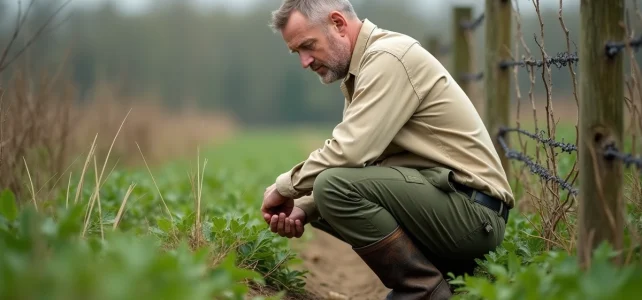
You have brambles colonizing a bank, or a vineyard inter-row overrun with bindweed. You are hesitating between two ubiquitous molecules on the shelf: triclopyr and glyphosate. The choice between these two herbicides relies less on their brute strength than on the type of targeted vegetation, the desired selectivity, and the current climatic conditions.
Root translocation during drought: a clear advantage for triclopyr in viticulture
When rainfall becomes scarce for several weeks, weeds reduce their leaf activity. They slow down sap circulation to conserve water. This survival mechanism alters how an herbicide moves within the plant.
Glyphosate, a non-selective systemic herbicide, requires an actively growing plant to be transported to the roots. Under prolonged water stress, its translocation to the roots decreases significantly. The molecule remains trapped in the foliage without reaching the underground organs. The result: rapid regrowth as soon as the rains return.
Triclopyr, on the other hand, belongs to the family of synthetic auxins. Its mode of action mimics a plant growth hormone. Even when the plant is functioning at a reduced pace, this hormonal disruption forces internal transport of the molecule to the root tissues. For grape growers facing increasingly frequent drought episodes, this property changes the game for controlling woody weeds in the inter-row.
Adapting the application schedule then becomes key. During dry periods, it is better to treat early in the morning, when residual humidity favors foliar absorption, and target the stages where the weed plant still maintains a minimum sap flow.
Selectivity of herbicides: grasses, dicotyledons, and collateral risks
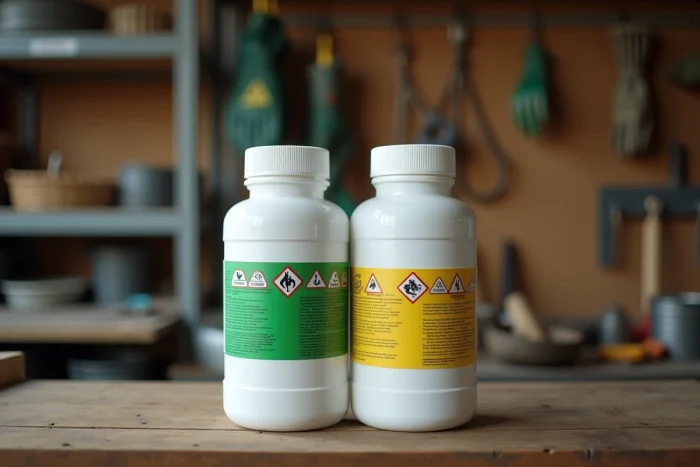
Are you looking to eliminate weeds without destroying a lawn or a herbaceous cover? This is where the difference between the two products becomes most visible in gardens as well as in agriculture.
Triclopyr is a selective herbicide that targets broadleaf plants (dicotyledons) and woody species. It spares grasses. When applied to a lawn, it destroys clover, ivy, or dandelion without harming the grass blades. This is also why it is used in brush management along power lines or railways.
Glyphosate, in contrast, makes no distinction. It destroys all vegetation affected by the spray, whether it is a grass, a flowering plant, or a young shrub. This lack of selectivity makes it effective for total weed control before sowing or on mineral surfaces, but dangerous when trying to preserve certain plants.
To choose wisely, first identify the nature of the problem. If you want to use triclopyr or glyphosate appropriately, ask yourself: should I clear everything or only target the broadleaf plants?
Regulations and restrictions on glyphosate use in France
The regulatory context increasingly influences the choice of molecule. The approval of glyphosate at the European level has undergone a reevaluation by the EFSA, published in November 2023. The European Commission then made a decision in December 2023, with a partial renewal accompanied by strengthened conditions.
Several countries and regions already restrict or prohibit the use of glyphosate in certain contexts: public green spaces, areas near waterways, non-agricultural uses. In France, amateur gardeners no longer have access to glyphosate-based products since the Labbé law.
Triclopyr, although subject to its own regulatory constraints, remains available in professional formulations such as Garlon. It retains approved uses in industrial vegetation management and agriculture for controlling brush and woody regrowth.
What this means in practice
- For a homeowner with a garden: glyphosate is no longer available for purchase. Professional triclopyr requires a Certiphyto. Accessible alternatives are mechanical or thermal.
- For a farmer or vineyard owner: glyphosate remains usable under conditions, but dose and buffer zone restrictions are tightening with each renewal.
- For a green space or land manager: triclopyr remains highly relevant for woody brush, where glyphosate would be both less effective and more constrained.
Persistence in soil and impact on subsequent crops
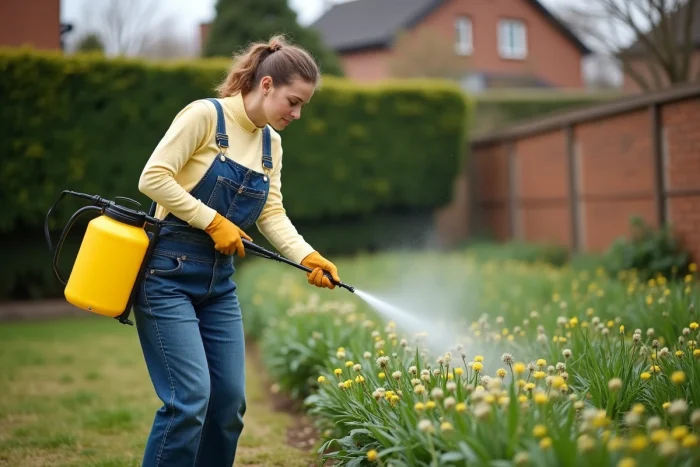
The lifespan of an herbicide in the soil determines the delay before replanting or sowing can occur. This parameter is often overlooked, yet it can ruin a crop rotation.
Glyphosate degrades relatively quickly in the soil, with a half-life that varies depending on soil type and microbial activity. In most situations, it does not prevent planting a crop a few weeks after application. This is one of the reasons for its historical success in conservation agriculture, where it replaces tillage to destroy a cover before direct sowing.
Triclopyr persists longer. Its half-life in the soil exceeds that of glyphosate in most substrate types. On land where you plan to sow a cover or plant quickly after treatment, this additional delay must be anticipated. Do not sow dicotyledons in the weeks following a triclopyr application, or you risk losing the emergence.
Which product for which weed control scenario
On a rotating agricultural plot, glyphosate (where it remains authorized) offers more flexibility for quickly following up with sowing. On a bank, a fence overrun with brambles, or a ditch colonized by acacia regrowth, triclopyr yields better results because it specifically targets woody plants without destroying the grassy cover.
The choice between these two molecules is not a question of strength. It is a question of context: nature of the weeds, presence or absence of plants to preserve, cultural calendar, weather conditions, and local regulatory framework. Taking ten minutes to assess this diagnosis before opening a can of herbicide prevents costly mistakes, both in time and in lost vegetation.