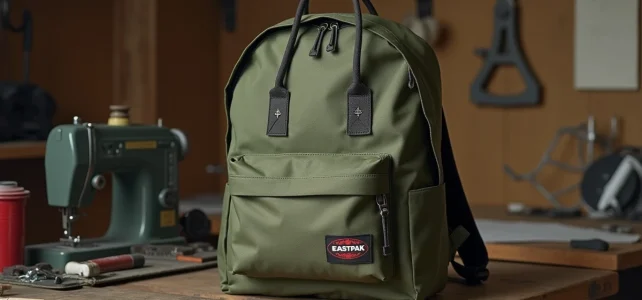
The Eastpak warranty is one of those sales arguments that has been repeated for years without the details of the conditions always being well understood. Presented as a “lifetime” warranty, it actually covers a period of thirty years, limited to manufacturing defects. This framing deserves close examination, especially since user feedback regularly points to a gap between the promised coverage and the actual experience of making a claim.
Manufacturing defect or normal wear: the problematic boundary
The entire mechanism of the Eastpak warranty relies on a distinction: manufacturing defects on one side, normal wear and accidental damage on the other. Only the former are covered.
A zipper that fails after a few months of standard use is generally considered a manufacturing defect. A fabric that tears after being overloaded for years, or a strap torn off due to snagging, will not be covered. The problem is that the boundary between these two categories is not always clear.
On specialized forums and buyer communities, reports of denied claims are common. Users report having sent a bag with a failed main seam, only to receive a response indicating that the damage was due to wear. To find out how the Eastpak warranty works in practice, one must accept that the assessment of the defect is at the discretion of the brand’s customer service.
60 Millions de Consommateurs even dedicated an article to the subject, headlining on a warranty that “alienates buyers.” The observation returned to the same point: after two years, coverage becomes significantly more restrictive. The legal warranty of conformity, which lasts for two years in France, offers a more protective legal framework than the Eastpak commercial warranty during this period.
Eastpak claim procedure: concrete steps and timelines
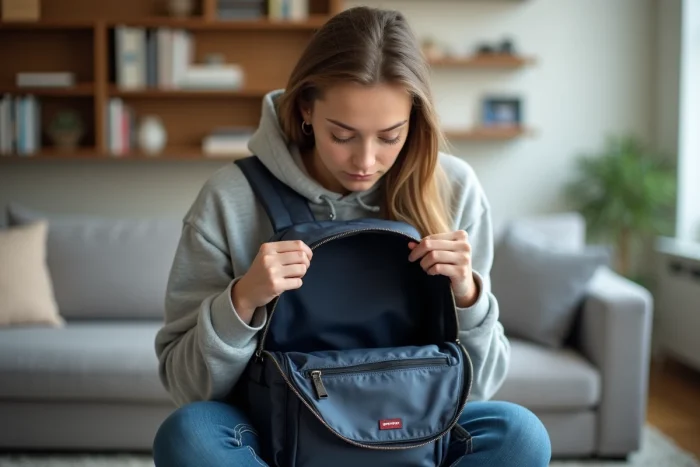
The claim process goes through the official Eastpak website. The brand asks to fill out an online form, accompanied by photos of the product and the observed damage. The inner label of the bag, which includes the model number and sometimes a production reference, must be legible.
Here are the required elements to file a claim:
- Clear photos of the bag, the inner label, and the observed defect, taken under sufficient lighting
- The completed warranty form on the site eu.eastpak.com, with a precise description of the problem
- Proof of purchase (receipt or order confirmation), even though Eastpak indicates that its absence does not systematically block the request
Once the request is validated, Eastpak offers either a repair or a replacement with an equivalent model. The choice between repair and replacement belongs to the brand, not the consumer. Timelines vary depending on the periods, but several users report waiting several weeks before receiving a response.
One point to note: the warranty does not cover products purchased from unauthorized resellers. If the bag comes from a third-party marketplace without Eastpak certification, the claim may be denied.
Eastpak warranty and sustainability: what thirty years do not cover
The promise of a thirty-year warranty creates an image of durability. A bag guaranteed for such a long time should, in theory, last for decades. In practice, the warranty does not extend the life of the product; it covers a specific type of failure.
An Eastpak bag with intact fabric but faded colors, compressed back foam, or a zipper that still works but catches slightly does not present any manufacturing defect in the sense of the warranty. It is simply worn out.
Eastpak does not offer a paid repair program for damages outside the warranty. There is also, to date, no official recycling or upcycling channel supported by the brand for end-of-life bags. An Eastpak bag that has been used for fifteen or twenty years and is no longer usable does not have an organized path by the manufacturer for revaluation.
This silence on post-warranty contrasts with the initiatives of other brands in the luggage or textile sector, which are developing open repair services (paid or not) and take-back programs. The Eastpak warranty protects against manufacturing defects, but it does not constitute a broad sustainability policy.
Backpacks, suitcases, and Eastpak accessories: same warranty conditions
The thirty-year warranty applies to the entire Eastpak range: backpacks, pencil cases, suitcases, travel bags, and accessories. The conditions remain the same regardless of the type of product.
For suitcases and wheeled bags, the wheels and telescopic handles are covered in case of manufacturing defects. However, damage caused by airlines during transport is not covered by the Eastpak warranty. Damage related to air transport must be claimed from the airline, not the manufacturer.
Laptop compartments and inner linings
The padded compartments for laptops, present on many models in the range, are covered just like the rest of the bag. A seam that comes undone on the padded compartment or a lining that peels off can be considered manufacturing defects.
Field reports diverge on this point: some users report quick coverage for this type of problem, while others face denial on the grounds that the padding “wears out naturally.” The absence of public and detailed criteria to distinguish wear from defects remains the main source of friction.
The Eastpak warranty fulfills its role for early material failures, where a manufacturing defect is difficult to contest. Beyond this window, the consumer faces a subjective assessment from customer service, without standardized recourse or repair alternatives offered by the brand. Thirty years of coverage on paper, but a narrowing scope of application over time.