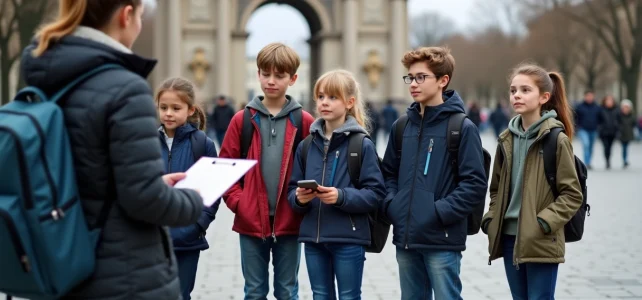
An additional supervisor is required as soon as the group exceeds fifteen students. However, some transport companies do not settle for this minimum and require enhanced supervision to accept a class booking. Another point to watch: the establishment’s civil liability insurance does not always cover all the sports workshops offered during the stay. It is better to check each clause before departure.
Since the start of the 2023 school year, targeted financial support is available from certain local authorities, provided a detailed educational project is presented. The timeframes for obtaining administrative approvals vary from one academy to another, even for a simple trip within France.
You may also like : Everything You Need to Know About Jon Hamm's Height, Weight, and Love Life
Educational school trips: why do they still generate so much enthusiasm?
The educational school trip is not just a simple episode in schooling. It embodies a collective approach where students, teachers, and families invest with particular energy. These school outings are not just about travel: they create experiences, forge connections, and give concrete meaning to teaching. Feedback from participants is clear: living together, discovering, learning differently—this transforms both the group and the individual.
On the organizational side, families and teachers form a strong duo. Parents accept the financial effort hoping that their child will gain openness and independence. Teachers, for their part, juggle supervision, adapting educational objectives, and managing unforeseen events. Organizations like UNOSEL advocate for ensuring access for all, while the Office reassures families about safety and the quality of care.
Read also : Everything You Need to Know About Fazekas 2 Vascular Leukoaraiosis Symptoms and Their Impact
Want to explore the topic or follow the latest trends? Partir en Classe articles provide valuable analyses and feedback. At the heart of each stay, the educational project remains the guiding thread: it structures the approach, linking each activity to an educational ambition. It is the cohesion, cultural or linguistic discovery, and learning independence that motivate everyone’s commitment. Ultimately, the school trip breaks the routine and fosters a collective dynamic rarely matched.
Key steps and tips for a smooth organization, from choosing the destination to managing the budget
From project to administrative approval
The organization of a school trip relies on close collaboration between the project-leading teacher, the head of the establishment, and the board of directors. The choice of destination directly stems from the collectively defined educational objectives. The head of the establishment validates the approach, and then the board of directors decides on the financial contribution of families. The accounting officer ensures the regularity of operations: they collect payments and settle invoices related to the stay.
To prepare for departure, several administrative steps are essential:
- Check the list of participants and gather all necessary documents: parental authorization, identity card, and, for a trip abroad, the exit authorization (CERFA form n°15646*01).
- Ensure that each minor has a valid identity document, accompanied by the signature of the parental authority.
- Consult official websites (diplomatie.gouv.fr, pasteur.fr, Ariane) to anticipate specific formalities and health recommendations.
Logistics and budget management
The choice of transportation directly influences the safety and organization of the trip. Regulated coach, train, or plane, each option has requirements to meet. The accommodation adapts to the destination: host families, youth hostels, hotels—everything is possible depending on the project. As for meals, they must take into account nutritional needs and sometimes the cultural specifics of the group.
On the budget side, coordination between accounting services and organizers allows for a good distribution of costs. Monitoring each expense item avoids unpleasant surprises and reassures families. The supervisors play a central role: they ensure both safety and educational supervision, which conditions the success of the stay.
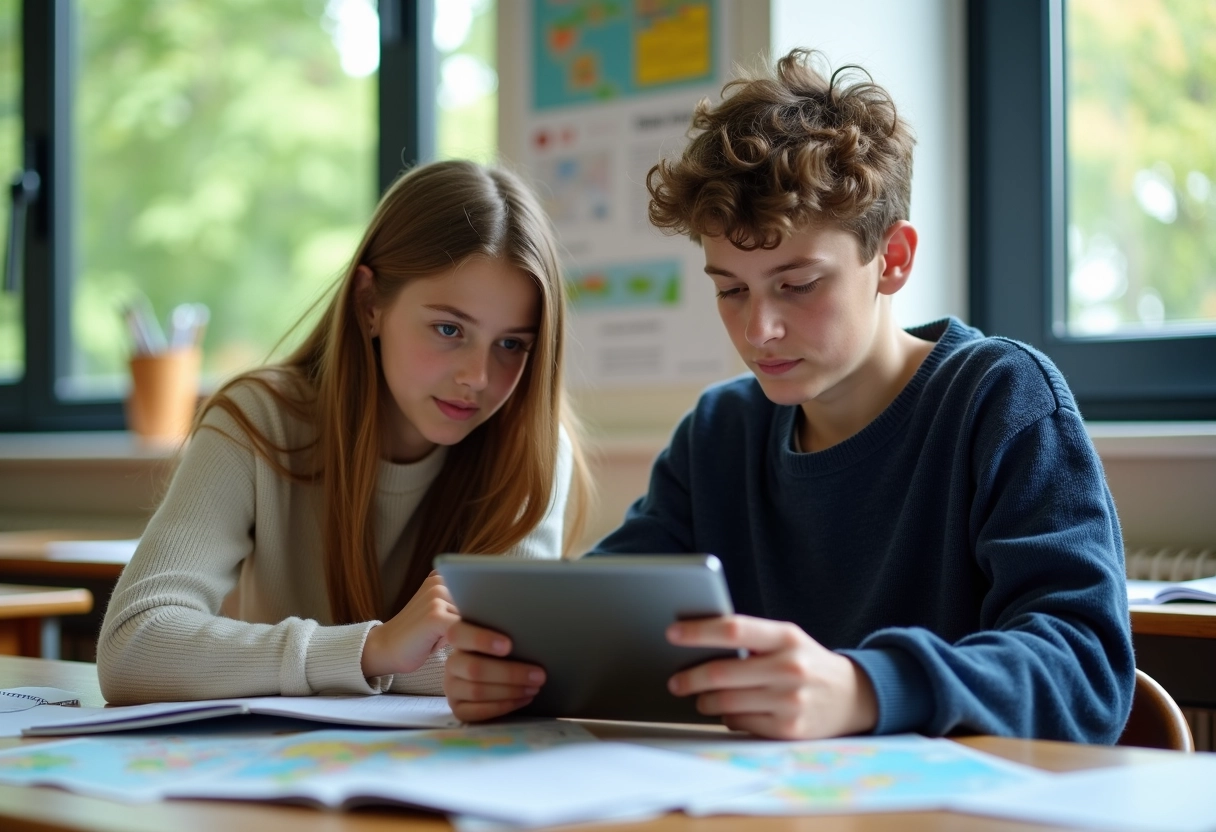
Frequently asked questions about safety, family involvement, and new developments to know this year
Safety of school trips: guarantees and obligations
The safety of students remains the priority of any organization of educational school trips. Each outing must be declared to the DVE for travel within France, or to the Dareic for a stay abroad. All supervisors undergo systematic checks through the FIJAISV, which guarantees the absence of any criminal record incompatible with supervising minors. As for insurance, each student and adult must be covered by appropriate civil liability.
The rules are precise: the circulars from the Ministry of National Education (MEN, BOEN) and the Code of Education strictly regulate the organization of stays. Establishments ensure compliance with these texts in collaboration with the academic authority. Families can contact the Apel for any questions, particularly through the conciliation commission.
Family involvement and recent developments
Family participation begins with the submission of essential documents (parental authorization, identity document, insurance proof) and by contributing to the financing of the trip. To ensure a good understanding of the project, educational teams hold multiple meetings, distribute brochures, and encourage exchanges with parents.
This year, several areas for improvement are highlighted: traceability of procedures, clarity on the use of funds, and strict control of compliance with health standards. Access to educational school trips aims to be more equitable thanks to new measures that reduce disparities among students. Each step aims to be more transparent, with each family better informed. School trips continue to evolve, always driven by the same collective energy: to offer every young person the opportunity to open up to the world, concretely, here and now.