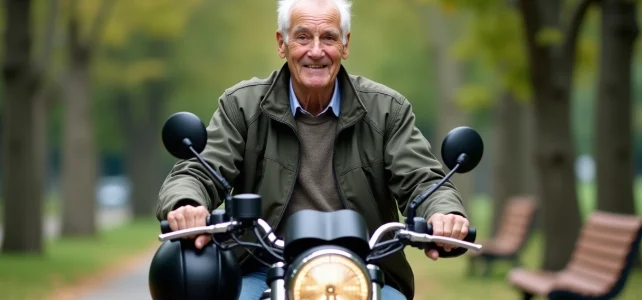
No legislation prohibits riding a motorcycle at 70 years old, but insurers sometimes impose surcharges or special conditions. Some models recommended by manufacturers turn out to be unsuitable for the daily use of seniors, despite reassuring technical specifications.
Most lightweight motorcycles are sold as accessible to everyone, while their complex ergonomics or seat height discourage shorter riders and beginners. The selection criteria are not limited to power or weight: other parameters truly determine comfort and safety for older riders.
Read also : How to Choose the Right Sports Equipment for Optimal Practice Conditions
The specific needs of 70-year-old motorcyclists: balancing pleasure and safety
At 70, choosing a motorcycle is no longer just a matter of brand or flattering technical specifications. What matters is maintaining a balance between comfort, enjoyment, and vigilance on the road. France still allows any holder of an A2 license to take the handlebars, provided they respect the power limit of 35 kW. However, experience shows that, after a certain age, reactivity, reflexes, hearing, and vision require renewed attention. Regular training sessions provide the opportunity to relearn certain gestures and better anticipate fatigue, which can creep in during long journeys.
One imperative remains: take care of the maintenance of the two-wheeler. A well-maintained machine means fewer unpleasant surprises and above all, safety that is never compromised. This question often arises: which motorcycle for a 70-year-old senior? Experience proves that a manageable model with a low seat and a well-placed center of gravity makes all the difference. Getting on, getting off, maneuvering: each action is done with less risk, less stress, especially when stopped or in narrow streets.
Further reading : Triclopyr or glyphosate: how to choose the right herbicide for your needs?
The social aspect should not be relegated to the background. Joining a motorcycle club offers a safety net, allows you to benefit from the experience of others, and ride with the strength of the group. These networks create a climate of trust, share practical advice, and remind us that motorcycling, at any age, remains a pleasure to be enjoyed without taking unnecessary risks.
What criteria should be prioritized when choosing a motorcycle suitable for seniors, beginners, and shorter riders?
After 70, choosing a motorcycle is primarily about maneuverability and accessibility. Forget the clichés of power; here, everything hinges on ease of use. A reasonable weight, ideally under 220 kg fully fueled, facilitates every maneuver and alleviates the stress of city stops or improvised U-turns. Seat height quickly becomes decisive: a low seat combined with a lowered center of gravity reassures and allows both feet to be flat on the ground, regardless of the rider’s size. Compact models have evolved significantly and now successfully combine comfort, safety, and ease of handling.
Driving comfort makes a difference over time. Softly tuned suspensions, a seat designed to protect the lower back, and a handlebar positioned without straining the shoulders: all these details, when combined, radically change the experience. On the safety side, certain features play a key role: ABS, traction control, and effective lighting. They limit unpleasant surprises, especially in the rain or on slippery roads.
Here are the main features to prioritize:
- Approved helmet for maximum protection
- CE certified gloves that combine comfort and safety
- High boots to prevent injuries in case of a fall
- Reinforced clothing capable of absorbing shocks and slides
For daily commutes or weekend rides, there’s no need to opt for a large displacement: moderate power is sufficient to ensure flexibility and peace of mind without losing the joy of riding.
Overview of recommended models for comfortable riding after 70
At this age, what appeals is ergonomics designed for the body and mind, hassle-free maneuverability, and comfort that accompanies the miles. Road trails stand out due to their upright posture, versatility, and suspensions that filter out irregularities. Adjustable seats allow both shorter and taller riders to find a reassuring position. Models like the Honda NC750X or the Yamaha Tracer 700 embody this compromise: low center of gravity, smooth engine, immediate handling.
For fans of long journeys, touring bikes remain a safe bet. The BMW R 1250 RT, for example, offers remarkable wind protection and ABS/traction control for serene travels, even for two. Customs, with their relaxed position and low seat, reassure those who fear a bike that is too heavy.
It would be remiss not to mention maxiscooters. Their flat floor, spacious storage, and automatic transmission make city and road life easier while reducing fatigue. As for mid-displacement trails, lightweight roadsters, or neo-retro models, they cater to those who want to combine accessibility and riding pleasure without compromising on safety.
Whether for rides, daily commutes, or trips for two, the choice of two-wheeler should be based on an honest assessment: size, reflexes, experience, safety equipment. In the French market, the range of models has expanded, and every senior profile, whether an experienced rider or a newly licensed A2 holder, can now find the motorcycle that suits them. The upcoming miles await just a turn of the key.