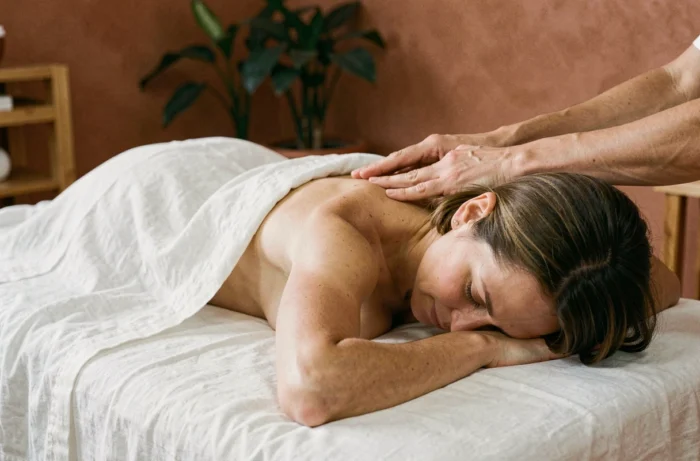
Wellness massages are the subject of a growing volume of scientific research. A mapping published in 2024 identified 129 systematic reviews dedicated to massage for pain in adults, with none reaching a high level of certainty. What do we really measure when we talk about the benefits of massage, and where do the limits of this data lie?
Scientific Evidence Level of Wellness Massages
Most competing articles claim that massage reduces stress, alleviates pain, and improves sleep. The available data nuances this picture.
| Effect attributed to massage | Level of evidence (2024) | Note |
|---|---|---|
| Pain relief in adults | Moderate (7 conclusions out of 129) | Complementary effect, not a replacement for medical care |
| Reduction of stress and anxiety | Low to moderate | Decrease in cortisol observed, variable amplitude depending on protocols |
| Improvement of sleep | Uncertain | Partial improvements in some indicators, no suitable strategy identified |
| Post-exercise muscle recovery | Low | Heterogeneous results depending on the type of massage and the sport practiced |
Of the 129 systematic reviews analyzed, only seven conclusions reached moderate certainty. The gap between public perception and actual evidence level remains significant.
The practices offered on lesmassagesdetiphaine.fr illustrate an approach that positions massage as a support for well-being, without therapeutic claims in the medical sense.
Massage and Sleep: Results to Be Taken with Caution
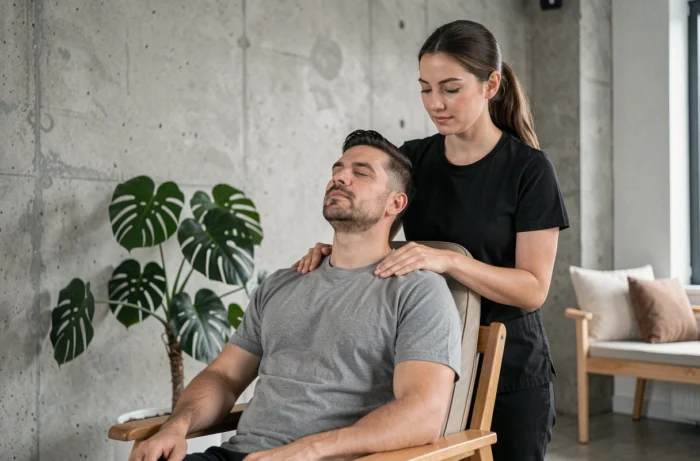
Among the most frequently highlighted benefits, the improvement of sleep deserves particular examination. A systematic review and network meta-analysis published in 2024 studied various external therapies in people suffering from insomnia.
The results show improvements in some indicators of sleep quality. However, no massage strategy stood out as the most effective among the tested approaches. The variability between studies (session duration, techniques used, participant profiles) makes any generalization premature.
Promising that a massage resolves sleep disorders would therefore be inaccurate. The relaxation effect and release of muscle tension contribute to better sleep onset in some individuals, but this benefit remains individual and does not constitute a treatment for insomnia.
Legal Framework for Wellness Massage in France
A rarely addressed point in articles about the benefits of massage concerns regulation. In France, the distinction between therapeutic massage and wellness massage is based on a precise framework.
- Therapeutic massage falls under the monopoly of physiotherapists, a regulated profession requiring a state diploma
- Wellness massage (or comfort massage) can be practiced without a state diploma, provided no medical or therapeutic purpose is claimed
- Wellness practitioners must have professional liability insurance and respect the limits of their intervention
A wellness practitioner is not authorized to make a diagnosis or treat a pathology. This legal boundary explains why the wording used on practitioners’ websites remains cautious: terms like relaxation, release of tension, and comfort are used, but never treatment.
Adverse Effects and Contraindications of Massages
Serious adverse effects related to massages remain rare. Documented incidents mainly concern high-pressure massages applied to vulnerable areas or sessions conducted despite unidentified contraindications.
Several situations justify postponing or adapting a session:
- Acute inflammation, fever, or skin infection in the area to be massaged
- Phlebitis or unstable coagulation disorders
- Recent fracture or non-united bone injury
- Certain cardiovascular pathologies, after medical advice
Wellness massage is a complement, not a substitute for medical care. A trained practitioner systematically questions the client about their health status before the session. This information-gathering step is crucial for the safety of the practice.

Choosing a Massage Technique Suited to Your Needs
The choice of technique depends less on a hierarchy of effectiveness than on the desired objective. A Swedish massage, which combines kneading and firm stroking, targets deeper muscle tensions more. In contrast, a Californian massage favors long, enveloping movements aimed at overall relaxation.
Techniques from Asian traditions (shiatsu, Thai massage) work on pressure points and stretching. No solid data demonstrates the superiority of one technique over another for overall well-being. The comfort of the receiver and the skill of the practitioner matter more than the name of the method.
The regularity of sessions seems to play a more decisive role than the chosen technique. The few data with moderate certainty regarding pain relief come from studies involving multiple sessions over several weeks, rather than a single session.
Wellness massages provide a real benefit of relaxation and release of tension, documented by research even if the level of evidence remains modest. The key takeaway: out of 129 systematic reviews, only seven reach moderate certainty. This does not disqualify the practice but invites us to place it in its rightful context, that of regular support for the body and mind, framed by practitioners aware of the limits of their intervention.